The Rules
Everything the dice do.
H.I.M.B.O., Elsewhen and Thrice-born run on one system. This page uses the shared names. Where H.I.M.B.O. calls something by its own name, that name sits beside it in pink.
Current playtest rules · November 2026

d8
Pillar dice
One for each dot in the Pillar you are using. These decide whether you succeed.
d20
Critical Die
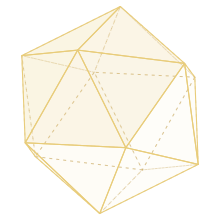
One on every meaningful action roll, unless a rule says otherwise. It never adds successes. A 20 is a Crit. A 1 is a Botch.

d12
Pulse dice
Only when you Reach: one for each Pulse you invoke, read on its own.
01
Pillars
Pillars are five categories of action, each rated from 1 to 5. Every game has all five and gives them its own names, so your character sheet shows your game’s names.
Resolve
Hope
Finesse
Instinct
Force
Manifestation
Influence
Beauty
Insight
Openness
02
Rolling
Say what you want before anyone rolls. Everyone should know what success means before the dice land.
- Say what you are trying to do, and what happens if it works.
- The GM sets the Difficulty: usually 5, never above 8. Anything easier than 4 usually just happens.
- Roll one d8 for each dot in the Pillar, plus the Critical Die.
- Each d8 that meets or beats the Difficulty is a success. None: you fail. One or more: you succeed. Extra successes count when how well you succeed matters.
Difficulty
 2
 57Three d8s at Difficulty 5 roll 2, 5 and 7: two successes.
Difficulty measures how hard something is. It never makes the impossible possible: if nothing could make the action happen, there is no roll until a power, Reach or some other permission opens the way.
Advantage and Disadvantage
With Advantage, roll your d8s twice and keep the better result. With Disadvantage, keep the worse. They never stack, and one of each cancels out. Only the d8s are affected.
The better result has more successes. If both have the same number, compare their dice from the highest down. The GM does not add Disadvantage for something the Difficulty already counts.
Specialties
A Specialty is a field of training, practice or knowledge tied to one Pillar. When it applies, you roll with Advantage.
It can also be what lets you attempt something that needs training at all.
The Critical Die
Crit (20): something extraordinary in your favour. On a success, it adds something beyond what extra successes give. On a failure, it can make the outrageous but conceivable happen.
Botch (1): catastrophe, not incompetence. The d8s still decide whether you succeed, so you can succeed and Botch.
03
Contests
When someone pushes back, both sides roll, usually at Difficulty 5. The GM chooses which Pillars meet, unless a power already says.
Who wins
More successes wins. On a tie, compare both pools die by die from the highest down; a win decided that way is narrow. If the pools are identical, reroll the d8s but not the Critical Dice.
Crits and Botches
If only one side Crits, that Crit can overturn a contest they were losing. If they were already winning, something extraordinary happens too. If both sides Crit, the d8s decide and both Crits still count. A Botch never loses a contest by itself.
Two shapes
Attack and Defense: one side acts, and the defender winning stops it.
Clash: both sides want incompatible things, and the winner gets theirs.
04
Reserve
BelongingYour Reserve is a real supernatural substance, not a pool of bonus points. In H.I.M.B.O. it is Belonging.
Capacity and Current
Capacity is how much you can hold. It starts at 2 and can reach 8. Many powers use it to set their scope. Current is how much you have right now, never more than your Capacity.
Reroll
After you see your final d8s, spend 1 to reroll every failed d8 once. Successes stay, and the Critical Die does not change. One spend per roll.
Heal
Spend 1 to heal 2 Normal Damage or 1 Lethal Damage.
Refill
Reserve comes back only when you obtain more of the substance in the story. It never refills automatically at the start of a session. Each game ties this to a different part of your character, but it works the same way.
05
Reach
The three Pulses are Glambright, Grimdark and Glimmerrot. To Reach is to bring them into an action, and do more than you otherwise could.
Glambright
Intensifies and sets apart. It creates novelty and makes the singular exception.
Grimdark
Carries forward and accumulates. It works through blood, memory, ownership, history and consequence.
Glimmerrot
Connects and recombines. It makes boundaries permeable and creates relationships that did not exist.
How
Invoke one, two or all three Pulses, each only once. Each adds a d12, rolled with everything else and read on its own. Pulse dice never add successes.
One or two Pulses normally alter an existing supernatural power or effect. Invoking all three can also make an otherwise impossible ordinary action possible to attempt.
The four Bounds
Each Pulse buys one change to one Bound. Say which Bound, what you are changing, which Pulse, and why that Pulse can do it.
Scale: how much it covers. Time: how long, how soon, how often. Potency: how strong or complete. Access: what normally keeps it out, such as touch, sight, identity or a barrier.
What happens
Reach Degree: how far a successful Pulse die reaches
A Pulse die succeeds when it meets your Pulse Difficulty, which rises with Exposure. Localized stays immediate and tight. Broad goes beyond the situation at hand. Major reshapes a site, a community or a system. Vast crosses huge distances, populations or spans of time. World-scale is the greatest earthly expression the effect can meaningfully have: anywhere in the world, every relevant target, or indefinite reach.
06
Exposure
Exposure is what repeated contact with the Pulses does to a Self. It never touches your d8s. It makes the next Reach harder.
Marking it
Every Pulse die that misses your Pulse Difficulty marks 1 Exposure. At 0 Exposure your Pulse Difficulty is 4. If several Pulse dice miss at once, mark them from the lowest roll up, and you break ties. That decides which Pulse crosses a line.
Manifestations
When your Exposure crosses 2, 4, 6 or 8, draw a card from your game's Manifestation deck, from the pile of the Pulse that pushed you over. Each card makes something specific happen: an event, a changed rule, a threat, a being, sometimes a gift. It lasts on its own terms, even after your Exposure falls.
Rest
After at least four hours of rest, roll your Rest Pillar at Difficulty 5, with no Critical Die. Each success removes 1 Exposure. In H.I.M.B.O., your Becoming names your Rest Pillar.
Claim
When the GM brings a real development to your Claim, the thing that still has a hold on you, your Exposure drops to 0 at once, however it turns out. You can ask for one, but only the GM bringing it into play resets your Exposure.
Exposure can sit at 8. Nothing vents or resets on its own. At 8 your Pulse Difficulty is D8, so any Pulse that succeeds is at least Major.
07
Conflict
Conflict starts when goals collide and the order of events matters. It uses the same rolls. A disagreement alone does not start rounds.
Your turn
One Action, plus ordinary movement and small interactions. One Reaction per round, only on a trigger; it returns at the start of your next turn. A Bonus Action only when a power grants one.
Actions
Attack, Evade, Maneuver, Influence, Power, Flee or Other. The category does not choose the Pillar. What you are trying to do does.
Order
Nobody rolls for it. Highest ResolveHope goes first. Ties go to FinesseInstinct, then ForceManifestation, InfluenceBeauty, InsightOpenness, then ReserveBelonging. The same order repeats every round.
Moving
The scene is made of Areas, not squares. Alongside your Action, move within your Area or into the next one. Sprint spends your Action to cover up to three Areas.
Engaged
Close enough to fight hand to hand. Moving away is allowed unless you are Grappled or held, and nobody gets a free attack when you go.
Defending
Your first defense each round is normal. Every later defense that round is at Disadvantage. Evade spends your Action on defense, so later defenses that round avoid that Disadvantage, and Exposed cannot cut your defenses that round, though it is not cleared.
In a contest: how much you win by
| Physical | Social and mental | |
|---|---|---|
| Narrow | Win by 1, or on the tiebreak. The intent happens. An Attack deals its base Damage. | The intent happens: if you persuade her you are authorized, she believes it. |
| Strong | Win by 2. An Attack adds +1 Damage or one appropriate Condition. | A cleaner, fuller, more complete result. |
| Overwhelming | Win by 3 or more. An Attack adds +2 Damage, or +1 Damage and a Condition, or two appropriate Conditions. | The result, and possibly one Social or Mental Condition. |
There is no damage roll. If what you wanted was a Condition, such as knocking someone Prone, winning imposes it. Ordinary Influence cannot create supernatural mind control.
08
Damage
Player characters normally have an eight-space Damage track; other beings and phenomena may have more or fewer spaces. Each space is a circle inside a diamond: fill the circle for Normal Damage, the diamond for Lethal. Either one takes a space.


Damage Ratings
Damage 0 is not nothing. The roll can still move someone, Grapple them, knock them Prone or impose a Condition.
Protection
Protection X subtracts X from incoming Damage, after any extra Damage from the margin of victory, to a minimum of 0. It does not make you harder to hit.
Resistance
Damage is Physical or Metaphysical. That is its type, separate from whether it is Normal or Lethal. Resistance to a type halves whatever is left after Protection, rounding up. Two Resistances to the same type do not stack.
Wounds
0 to 1 Lethal
None
2 to 3 Lethal
+1
4 to 5 Lethal
+2
6 to 7 Lethal
+3
8 Lethal
Dying
Every 2 Lethal Damage is a Wound, and each Wound adds 1 to the Difficulty of every roll, never past 8. You heal Damage, not Wounds: heal the Lethal Damage and the Wound goes with it.
Taken Out and Dying
A full track with fewer than four Wounds means you are Taken Out. Four Wounds, or any Lethal Damage while Taken Out, means you are Dying. If you are still Dying at the end of the third round, you are Dead. More Lethal Damage does not hurry it.
A successful InsightOpenness roll stabilizes a Dying character and stops the count. A medical Specialty gives Advantage, and the roll may Reach. You stay Taken Out with all your Damage, and new Lethal Damage starts a fresh three rounds.
Healing
Rest: each dawn, if you have taken no new Damage since the last, heal 1 Normal. Seven days without new Damage heal 1 Lethal.
Treatment: once a day, roll the Pillar the treatment calls for, with Advantage if it fits a medical Specialty. Each success heals 1 Normal. It cannot heal Lethal.
Reach: roll ResolveHope at Difficulty 6 with one to three Pulse dice and the Critical Die. You need at least one success. Each success heals 1 Normal. Each Pulse die that succeeds and shows 7 or more heals 1 Lethal. Failed Pulse dice still mark Exposure.
09
Conditions
A Condition is a named, temporary state. It is either on or off, never stacks with itself, and always says how it ends.
Physical
- Prone
- You cannot leave your position until you stand, and standing uses your movement. Ends when you stand.
- Grappled
- You cannot move away from the grappler, and actions that need free movement may be out of reach. Ends when you escape or break the hold.
- Blinded
- You cannot act on what you cannot locate. If you know roughly where it is, you may try at Disadvantage. Ends when you can see.
- Deafened
- Nothing that relies on hearing alone. Ends when you can hear.
- Silenced
- Nothing that needs your voice. Ends when the cause is removed.
- Paralyzed
- No physical action with the affected body. Nonphysical actions remain possible if the effect and your circumstances allow. Ends when the cause ends.
- Exposed
- Your next defense rolls one fewer d8. Evade holds it off for the round. Ends once it has cut a defense.
Social and mental
- Shaken
- +1 Difficulty on ResolveHope rolls. Ends with the scene, or when composure returns.
- Compromised
- +1 Difficulty to resist Influence that uses the leverage behind it. Ends when that leverage stops working.
- Frightened
- You cannot willingly move closer to the source unless you must. Ends when the source is gone, the scene ends or the fear is overcome.
- Distracted
- Disadvantage to notice anything outside a named focus. Ends when you spend an Action to refocus, the distraction ends, or the scene does.
10
Powers in play
Every power says exactly how it is used. These words mean the same thing in every game.
Activation
Action, Bonus Action, Reaction (with its trigger) or Passive.
Duration
Instant resolves at once. Sustained lasts while you keep its stated requirement. Ongoing lasts until its stated end.
Focus
You can hold one Focus effect at a time. Keeping it takes no Action, Reaction, Bonus Action or roll, though the power’s own costs and maximum duration still apply. It ends if you let go, start another, fall unconscious, are Taken Out, take a new Wound, or something interrupts it.
Range
Self, Touch, Engaged, Same Area, Adjacent Area, Within a number of Areas, or Special.